
Montezuma County Parole vs Probation
Parole and probation are not the same status in Montezuma County. Parole is tied to a state prison case, a Colorado Department of Corrections record, and supervision through the CDOC Division of Adult Parole after a state inmate leaves prison. Probation is a court sentence or court-supervision status handled through the Colorado Judicial Branch probation system. A person may leave the Montezuma County Detention Center on bond, sentence served, or a court order and still have no parole record at all.
The clean way to sort the status is to ask what event caused release. If the release was from the county jail to the community, the Montezuma Combined Courts and Montezuma County Probation may explain the next step. If the jail release was a transfer to CDOC, the state offender profile and parole-board calendar become more useful than the county jail file.
| Status | Who handles it | Where to verify |
|---|---|---|
| Probation | Colorado Judicial Branch, 22nd Judicial District Probation | Montezuma County Probation and the court case record |
| Parole | CDOC Division of Adult Parole and Colorado State Board of Parole | CDOC Offender Search and the parole-board calendar |
| County jail release with no supervision shown | Montezuma County Sheriff's Office and court records | Booking report, inmate incarceration history, release entry, and court disposition |
- Parole
- State supervision after a prison release or state mandatory release.
- Probation
- Court supervision that can begin after a county jail release or as part of a sentence.
- Discharge
- The end of a custody or supervision term when the controlling agency closes that status.
Verify Montezuma County Supervision
A released Montezuma County person may have more than one record trail. The jail can confirm the custody event. The court can explain the sentence, bond change, deferred judgment, or probation order. CDOC can show state prison, parole, discharge, and time-computation context for a state offender. VINELink can help with alerts when a participating custody agency reports a release or transfer, but it is not a full supervision file.
Use the person's most exact identifiers first. A DOC number is best for state parole. A court case number is best for probation. If neither is known, match by full name, date of birth, booking date, and the Montezuma County arrest or case context. A broad name search can mix people with similar names.
- Decide whether the release was from the Montezuma County Detention Center, CDOC, federal custody, or another agency hold.
- For parole, search the CDOC Offender Search by DOCNO first, then by last name, first name, and gender.
- For probation, search the court docket or contact Montezuma County Probation with the case context.
- For the release event itself, request the jail booking report or inmate incarceration history from the Sheriff's Records Division.
- When a release was tied to a hearing, request the disposition, sentence, or minute order from Montezuma Combined Courts.
Important: A person released from the county jail is not automatically on parole. Parole usually means a state prison or CDOC case.
For a named-person release path that starts at the county jail, the broader Montezuma County released inmates search route ties together the jail record, court file, CDOC, VINELink, and federal custody checks.
Montezuma County Probation Office
Montezuma County Probation is the local court-supervision office for cases handled in the 22nd Judicial District. The location page lists the probation office at the same North Park complex as the court system, with regular weekday hours and state-holiday closures. The program page identifies Chief Probation Officer Hilda Moreno for the district covering Dolores and Montezuma Counties. That local office is the practical contact when a released county defendant is on probation rather than parole.
Montezuma County Probation
865 North Park, Suite 200
Cortez, CO 81321
(970) 565-7216
Fax: (970) 565-7937
Monday-Friday, 8:00 a.m. to noon and 1:00 p.m. to 5:00 p.m., closed state holidays.
Montezuma Combined Courts
865 North Park Street, Suite 100
Cortez, CO 81321
Use court records for disposition, sentence, bond changes, and probation orders.
Probation information is not the same as a jail release list. If the question is whether the person left custody, the Sheriff's release record matters. If the question is what the person must do after release, the court order and probation file are the right route, subject to public-access limits.
Note: Court and probation staff may confirm only what their access rules allow, so formal records may require a court request.
Colorado Parole Calendar for Montezuma Releases
State parole research for a Montezuma County case begins with CDOC, not with the county jail. The Colorado State Board of Parole calendar is inside the CDOC public search interface. Research found a date-based calendar with visible month views, instructions to hover over a date for that day's schedule, and a larger-calendar view reached from the calendar title. It is a hearing schedule, not a county release list.
The parole calendar can answer whether a state inmate may have a hearing coming up. It does not prove that release happened. A grant, denial, deferral, rescission, or rescheduled hearing must be confirmed through the offender profile, parole records, or an official Board action notice when available.
The CDOC parole-board calendar is the source image below. The calendar source helps separate a pending state parole decision from a Montezuma County jail release.
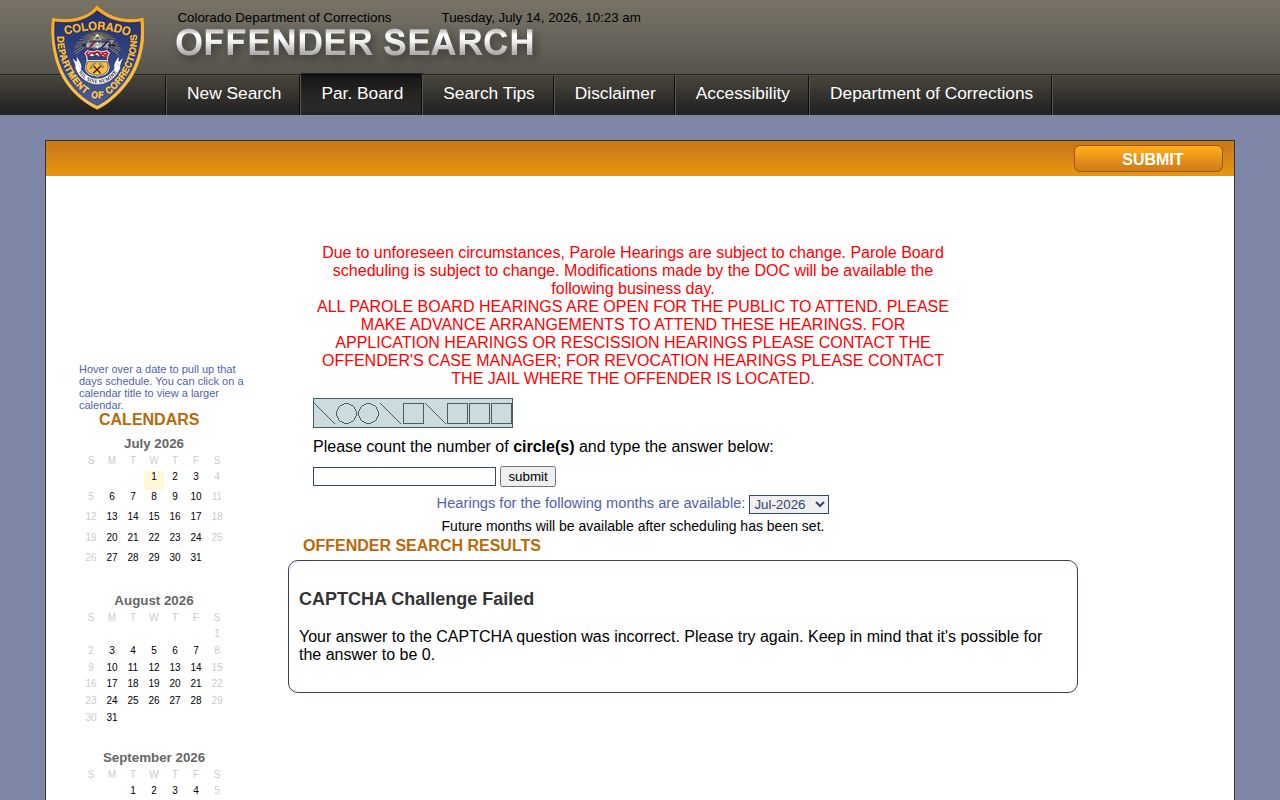
Use the calendar with the person profile. A hearing date can move, and a hearing result is not the same thing as physical release from custody.
Montezuma County Probation Programs
Montezuma County has a strong local probation angle because the probation program page gives detailed post-release requirements for specialty cases. The DUI Court Program is described as intensive probation for certain alcohol-related driving offenses. It includes assessment, monitoring, supervision, treatment, and court appearances. The research notes that all DUI Court participants serve 45 days in jail as a sentence condition, with work release allowed by the court but subject to Sheriff's Department approval.
That makes release status more nuanced than "in jail" or "free." A person may be released from custody and still have court review hearings, treatment, monitoring, probation appointments, support-service participation, useful public service, and payment arrangements. A work-release approval also depends on both the court's order and the Sheriff's side of the process.
The Montezuma County Probation program page is the source for those local program details. It should be read with the court case because program status can turn on the sentence terms.
Montezuma County Violations and Absconders
Conditions are the rules of supervision. They can include reporting, treatment, testing, monitoring, payment terms, no-contact orders, travel limits, and court review hearings. A violation means the supervising agency or court believes a rule was broken. An absconder is a person who has stopped reporting or cannot be located by the supervising agency. Those terms do not prove a new conviction, but they can lead to a warrant, revocation process, or return to custody.
For probation violations, the court case and probation office are the key channels. For parole violations, CDOC and Adult Parole are the state channels. VINELink may help with custody-change alerts if the person is booked or transferred in a participating feed. A jail record may show a hold, warrant, or transport event, but the reason often sits in the court or parole file.
Note: A current jail booking may reflect a hold or warrant while the underlying supervision issue remains in a separate case file.
Montezuma County Parole Reentry
WAGEES gives a local reentry navigation point for state parole. The WAGEES location page lists a Durango adult-parole location covering Archuleta, Dolores, La Plata, Montezuma, and San Juan Counties. It names Manna Soup Kitchen and The Pinon Project as community partners. That is useful local context for people trying to understand parole support in southwest Colorado.
WAGEES is not a parole office and does not change parole status. The research specifically notes that community partners cannot authorize a change to a parole plan or parole jurisdiction. Only the Division of Adult Parole can do that. For a release check, use WAGEES as local navigation after the parole status has been verified through CDOC or Adult Parole.
The WAGEES location source is shown below. The listed Durango coverage is relevant because it names Montezuma County among the counties served by that adult-parole location.
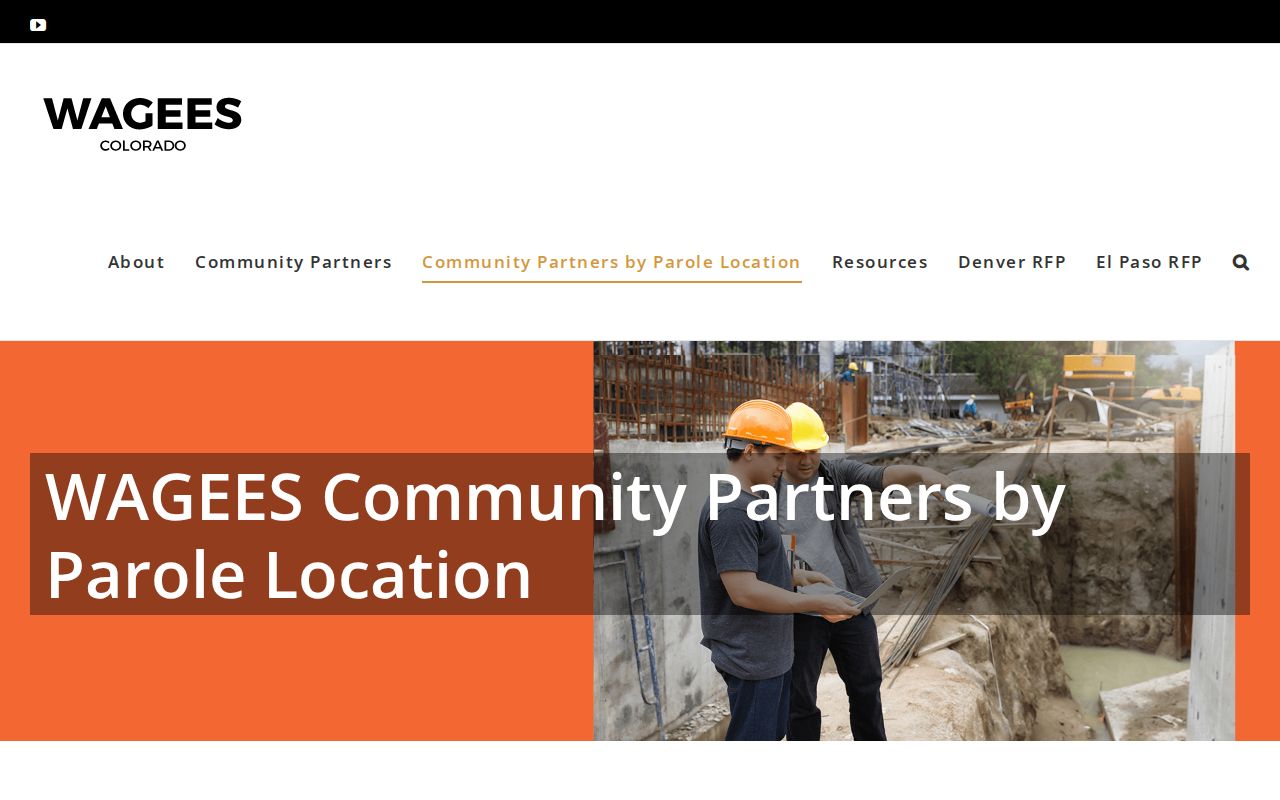
For probation, stay with the court and Montezuma County Probation instead. Probation and parole have different agencies, records, and authority.
Ending Montezuma County Supervision
Supervision ends when the controlling court or corrections agency closes the supervision status. For probation, that may mean completion, early termination by court order, revocation, or a changed sentence. For parole, it may mean discharge from CDOC supervision, return to custody, or another state action. The release record tells when custody changed, but the supervision record tells whether post-release control still exists.
Colorado public-records access can be limited by sealed cases, juvenile records, protected information, or agency rules. The Colorado Judicial Branch Seal My Case materials explain that sealed records are hidden from public view, though the records still exist and some authorized entities may retain access. If a public docket or search result seems incomplete, the court or agency that created the record is the best confirmation source.
A narrow request works best: ask for the disposition, sentence, probation order, release entry, or discharge record tied to the known case or booking. Avoid broad requests when the goal is simply to confirm whether supervision remains active.
Public Record Search
Sponsored Results