
Montezuma County Release Date Types
A projected release date is an estimate or computed date. It is not the same as the actual time a person walks out or transfers. In Montezuma County, a local jail release date can turn on bond, court orders, sentence served, a transport event, a hold from another agency, or an alternative-sentencing placement. The Sheriff's Detention Division handles custody and transport, while the Records Division is the local fallback for the booking report and inmate incarceration history.
For CDOC, the projected date belongs to the state prison record. The research found that the CDOC public search form accepts DOCNO, last name, first name, and gender. A live profile field label could not be confirmed without a CAPTCHA-backed search, so the safe wording is to use the CDOC profile's time-computation fields, including any projected release, parole eligibility, or mandatory release date shown on the result, and confirm official calculations with CDOC.
Scheduled vs actual: A scheduled or projected release date can change before the release occurs. The actual release record confirms the final date, time, and reason.
Find a Montezuma County Release Date
The right search depends on custody type. If the person is still in the Montezuma County Detention Center, the jail can answer current custody status, but the formal record comes from the Sheriff's Records Division. If the person was transferred to the Colorado Department of Corrections, the county jail release date may only be the transfer date. The state release date then belongs in CDOC records.
- Start with custody type: county jail, CDOC prison, federal BOP, USMS transport, ICE custody, or court probation.
- For a Montezuma County jail sentence, ask for the inmate incarceration history, booking report, and release entry through the Sheriff's Records Division or NextRequest portal.
- For a state prisoner, search the CDOC Offender Search by DOCNO when possible.
- Use Montezuma Combined Courts when the date depends on bond, sentence, amended mittimus, dismissal, or probation terms.
- Register through VINELink Release Check when the person is in a participating custody feed and the goal is an alert.
- For federal sentences, use BOP. For immigration custody, use ICE. A county jail release may be a transfer, not a community release.
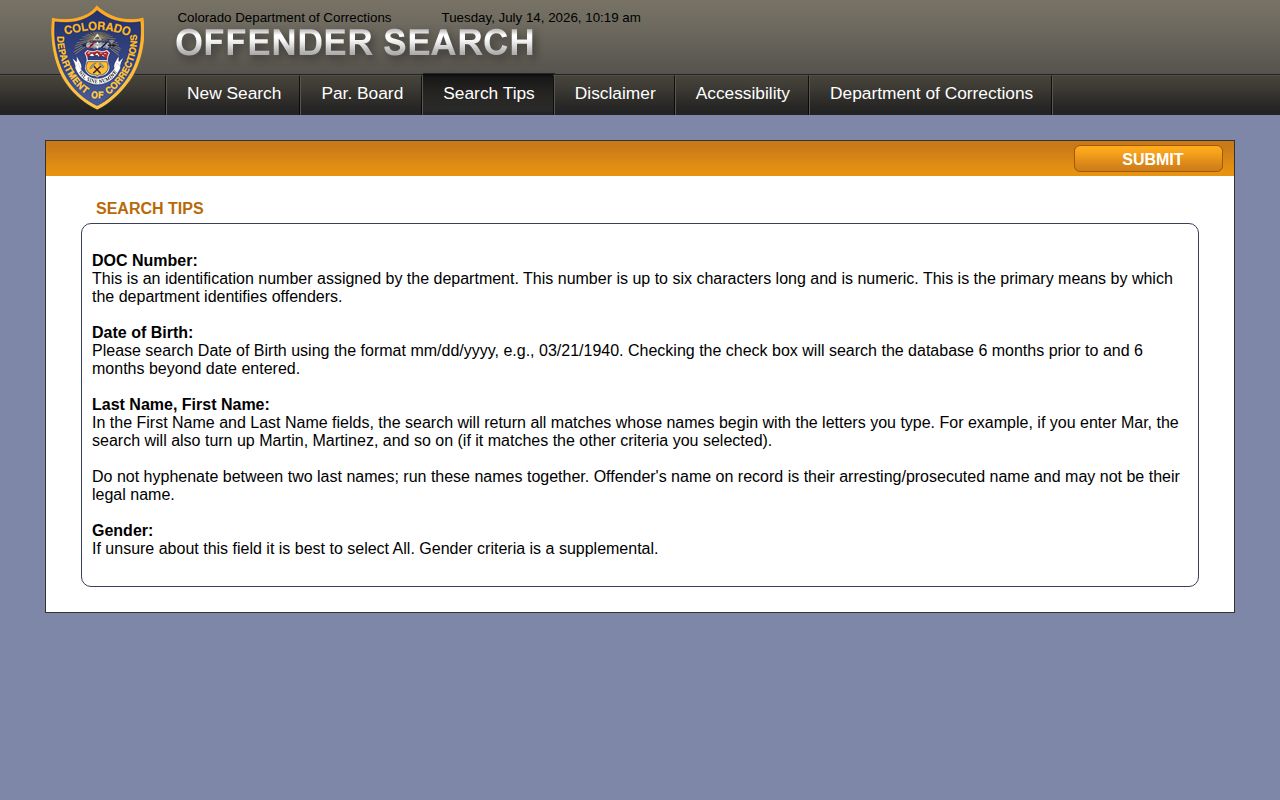
The CDOC search tips explain why exact identifiers matter. DOC number is the primary state identifier. Name searches return names beginning with the letters entered, and the record name may be the arresting or prosecuted name rather than a later legal name.
The CDOC search tips source is shown below. It supports the Montezuma County release-date workflow because state release dates are searched differently from county jail records.
Montezuma County Jail Has No Fixed Date
A pretrial detainee in Montezuma County usually does not have a set release date. Release may depend on bond, a court hearing, a dismissal, a plea, a changed condition, a sentence, or another agency hold. The same jail stay can also end with transport to CDOC, transfer to another county, USMS custody, or ICE-related custody rather than release to the community.
That is why generic release-date formulas are risky for local jail cases. The Sheriff's site does not publish a local good-time policy, trustee-time formula, or weekend-release rule in the sources reviewed. The safer route is the court sentence, mittimus, release order, and jail release record. The Montezuma County Detention Center also documents alternative sentencing programs such as work release, home detention, day reporting, weekend inmate status, and useful public service. A "release" may be a move into one of those statuses.
| Question | Best Montezuma County source |
|---|---|
| Is the person still in jail? | Detention Division custody check |
| What was the final release date and reason? | Sheriff's Records Division booking report or inmate incarceration history |
| Did the court order release? | Montezuma Combined Courts docket, disposition, or minute order |
| Was it really a state prison transfer? | CDOC Offender Search and county release or transport record |
Colorado Earned Time Rules
Colorado state release-date computation depends on the sentence, offense date, offense class, earned time, parole eligibility, mandatory-release rules, and misconduct. C.R.S. 17-22.5-403 is the parole-eligibility statute cited in the research. It gives a general eligibility rule after fifty percent of the imposed sentence, less earned time, for many felony classes, while also carrying special rules for listed violent offenses and date windows. Do not reduce that statute to a single rule for all cases.
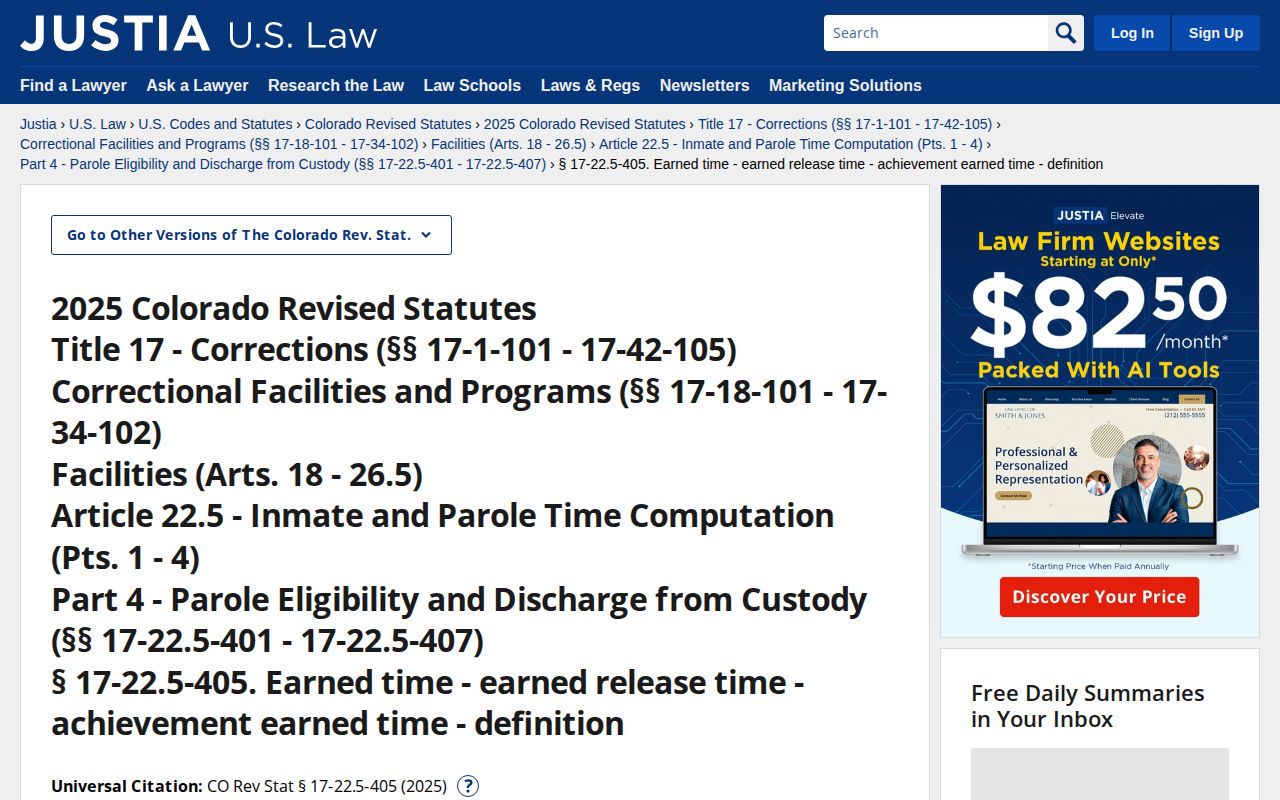
C.R.S. 17-22.5-405 covers earned time in the current framework. The research notes earned time up to ten days per month for consistent progress in listed areas, up to twelve days per month for some qualifying lower-class felony or drug felony offenders, and an ordinary earned-time cap of thirty percent except where the statute provides otherwise. It also includes earned release time and achievement earned time for qualifying cases.
C.R.S. 17-22.5-302 is an older time-computation category. The research notes earned time up to thirty days for every six months of incarceration in addition to good time for inmates who make substantial and consistent progress in listed areas. That older framework matters because offense date and sentence category can change which rule applies.
The earned-time statute source is shown below. The C.R.S. 17-22.5-405 page is useful when a Montezuma County sentence later becomes a CDOC time-computation question.
Why Montezuma Release Dates Change
Release dates can change for both local and state custody. A jail date may change after a hearing, a bond modification, a corrected sentence, or a hold from another agency. A CDOC date may change through earned-time credits, parole-board action, discipline, corrected presentence confinement credit, or a changed judgment. Administrative timing can matter, but no Montezuma County-specific weekend-release rule was found in the official sources reviewed.
| Factor | How it affects the date |
|---|---|
| Corrected sentence or mittimus | Changes the base term or credit used for the calculation. |
| Presentence confinement credit | Moves the computed state or local sentence date when credit is added or corrected. |
| Earned time | Can reduce a CDOC time-computation date if granted and retained. |
| Misconduct | Can affect earned time or extend parole-eligibility timing under state rules. |
| Parole-board action | A grant, denial, deferral, rescission, or schedule change can alter release planning. |
| Detainer or agency hold | May prevent community release even when one custody basis ends. |
Note: A transfer date in the county jail record is not the same as a final state discharge date.
Confirm Montezuma Release Date
Confirmation should come from the agency that controls the custody status. For a local jail release, ask the Sheriff's Records Division for the booking report, release entry, or inmate incarceration history. For a state prison date, use CDOC and confirm official time calculations with CDOC when proof is needed. For a court-based release, use Montezuma Combined Courts for the disposition, sentence, bond order, or minute order.
VINELink is useful before release because it can send custody-change alerts when the person is in a participating feed. It is not a substitute for the release record. If VINELink says a person was released or transferred, pair that status with the Sheriff, court, or CDOC record to learn the release reason and authority.
Montezuma County Sheriff's Records Division
730 East Driscoll Street
Cortez, CO 81321
(970) 564-4965
Records requests include inmate incarceration history and booking reports.
Colorado Department of Corrections
Use CDOC Offender Search for state custody, parole, discharge, and time-computation context.
Public Record Search
Sponsored Results